10 Common Legal Problems and How to Solve Them
Legal problems can arise at almost any stage of life. You might have a disagreement with your landlord, face an issue at work, experience an online scam, or struggle to resolve a contract dispute. Even a seemingly small misunderstanding can become stressful when money, personal rights, or important responsibilities are involved.
The good news is that understanding your options can make these situations easier to manage. Keeping proper records, communicating clearly, and seeking professional advice when necessary can help you avoid unnecessary complications.
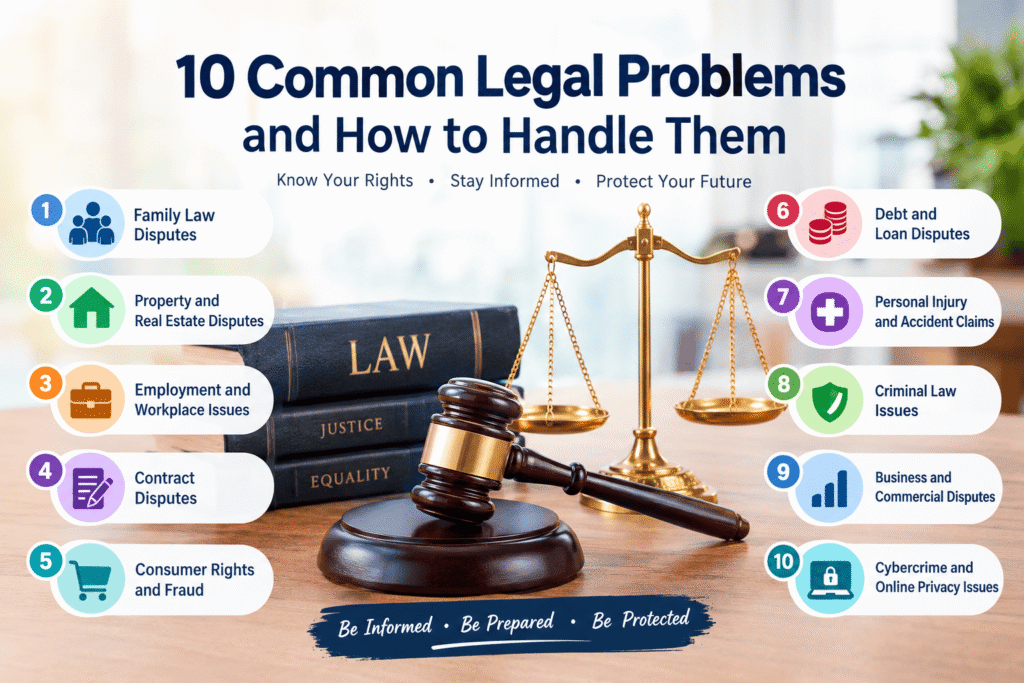
In this guide, we will explore 10 common legal problems, explain why they happen, and share practical steps you can take to handle them more effectively.
Family Law Disputes
Family-related legal problems can be emotionally difficult because they often involve people who have close personal relationships. Common issues include divorce, child custody, child support, guardianship, and disagreements over shared property or financial responsibilities.
For example, a couple going through a separation may disagree about who should care for their children or how their assets should be divided. Without clear communication, these disagreements can become more complicated.
How to handle family law disputes:
- Keep important documents, such as marriage certificates, financial records, and relevant correspondence, organized.
- Try to communicate respectfully when it is safe and appropriate to do so.
- Consider mediation if both parties are willing to work toward an agreement.
- Consult a qualified family lawyer before making major decisions about children, property, or financial support.
- If you experience domestic violence or abuse, prioritize your safety and seek appropriate protection and emergency assistance.
Family disputes require patience, but protecting your rights should remain a priority. Before signing an agreement or making a major decision, make sure you understand its possible legal consequences.
Property and Real Estate Disputes
Property disputes are common among homeowners, landlords, tenants, buyers, and sellers. Problems may involve unclear ownership, disputed boundaries, unpaid rent, inheritance disagreements, or conflicts over the terms of a property transaction.
Imagine purchasing a piece of land and later discovering that another person claims ownership of part of it. If the documents are incomplete or the boundaries were never properly verified, resolving the issue may take considerable time and money.
How to handle property disputes:
- Keep copies of deeds, purchase agreements, lease contracts, receipts, and payment records.
- Verify ownership and relevant property records before buying land or buildings.
- Review rental agreements carefully before moving into a property.
- Communicate with the other party in writing so there is a clear record of the discussion.
- Seek legal advice if ownership is disputed or someone threatens eviction or legal action.
One of the simplest ways to prevent property problems is to verify documents before making a financial commitment. Never rely entirely on verbal promises when a transaction involves significant money or valuable property.
Employment and Workplace Issues
Workplace disputes can affect both employees and employers. Common problems include unpaid wages, unfair dismissal, workplace harassment, discrimination, unsafe working conditions, and disagreements over employment contracts.
For instance, an employee may leave a job without receiving their final salary, or an employer may discover that a worker has violated an important contractual obligation. In either case, understanding the relevant employment rules is essential.
How to handle workplace problems:
- Read your employment contract and workplace policies carefully.
- Save appointment letters, payslips, emails, and other relevant employment records.
- Document incidents of harassment or unfair treatment, including dates and details.
- Use the appropriate internal complaint process when it is safe and suitable.
- Contact the relevant labor authority or an employment lawyer if the issue remains unresolved.
Keeping a record of workplace communications can make a significant difference when a disagreement arises. If you believe your rights have been violated, check the applicable labor laws and any deadlines for filing a complaint.
Contract Disputes
Contracts help establish clear expectations between people and businesses. They are used when purchasing products, hiring service providers, renting property, starting partnerships, or accepting employment.
A contract dispute may occur when one party fails to deliver an agreed service, misses a payment deadline, provides defective work, or refuses to follow the terms of an agreement.
For example, you might hire a contractor to renovate your home, pay an advance, and then discover that the work has stopped without a reasonable explanation. Your options will depend on the contract, the available evidence, and the law that applies.
How to handle contract disputes:
- Read the agreement and identify the obligation that has not been fulfilled.
- Collect invoices, receipts, messages, emails, and proof of payment.
- Contact the other party in writing and explain the problem clearly.
- Request a reasonable solution, such as completing the work, correcting a defect, or resolving an outstanding payment.
- Consider mediation, arbitration, or court proceedings when informal discussions fail and those options are available.
Before signing any contract, pay attention to payment terms, deadlines, cancellation conditions, penalties, and dispute-resolution procedures. A clear written agreement can help prevent misunderstandings later.
Consumer Rights and Online Fraud
Consumers sometimes receive defective products, experience poor services, encounter hidden fees, or discover that an advertisement made misleading claims. Online shopping has also created opportunities for scammers to trick people into sending money or sharing sensitive information.
For example, someone may pay for a product through a social media page but never receive the item. Another customer may discover unexpected charges after purchasing a service.
How to handle consumer complaints and fraud:
- Keep receipts, order confirmations, invoices, warranties, and screenshots of advertisements.
- Contact the seller or service provider and describe the issue clearly.
- Request an appropriate remedy, such as a refund, repair, replacement, or cancellation, where available under applicable law.
- Report suspected fraud to the relevant consumer protection authority or law enforcement agency.
- Contact your bank or payment provider promptly if you notice an unauthorized transaction.
Prevention is equally important. Be cautious when dealing with unfamiliar sellers, unusually attractive offers, or websites that lack clear contact information.
Never share your passwords, one-time verification codes, or sensitive banking details with unverified individuals. If an offer seems suspicious, take time to verify it before sending money.
Debt and Loan Disputes
Debt-related problems can arise when borrowers miss payments, lenders apply disputed fees, repayment terms are misunderstood, or two parties disagree about the amount owed.
Financial difficulties can make these situations stressful, especially when collection calls or formal notices begin to arrive. Ignoring the problem, however, may limit your options or lead to additional consequences.
How to handle debt disputes:
- Review the loan agreement and check the outstanding balance.
- Request a written statement explaining the principal, interest, fees, and other charges.
- Keep receipts and records of every payment you make.
- Contact the lender to discuss a realistic repayment arrangement if you are experiencing financial difficulties.
- Seek legal advice if the debt is disputed, collection practices appear unlawful, or you receive a court notice.
If you believe a lender has calculated the debt incorrectly, ask for clarification and keep a record of the response. Do not agree to payment terms you do not understand.
Most importantly, take official notices and legal deadlines seriously. The appropriate response will depend on the agreement and the laws governing the debt.
Personal Injury and Accident Claims
Accidents can happen on roads, at work, in public places, or on private property. Depending on the circumstances and applicable law, an injured person may be entitled to seek compensation for certain losses.
These losses may include medical expenses, lost income, property damage, and other legally recognized costs. However, compensation is not automatic, and the outcome depends on the facts of the incident and the relevant legal requirements.
How to handle an accident-related legal problem:
- Seek medical attention promptly when needed.
- Report the accident to the appropriate authority if required.
- Take photographs of the scene and any damage when it is safe to do so.
- Collect witness details and relevant insurance information.
- Keep medical records, receipts, repair estimates, and documents showing financial losses.
- Consult a qualified lawyer to understand your options and any applicable filing deadlines.
After an accident, it is easy to focus only on immediate expenses. Keeping organized records can help you understand the full impact of the incident.
Before accepting a final settlement or signing a release, make sure you understand the terms and the rights you may be giving up.
Criminal Law Issues
Criminal law issues can involve theft, assault, fraud, cybercrime, domestic violence, or allegations of other unlawful conduct. These situations can have serious consequences for everyone involved.
Being accused of an offense does not automatically establish guilt. Criminal cases must be handled through the applicable legal procedures, and the rights available to each person depend on the jurisdiction and circumstances.
How to handle a criminal law issue:
- Contact a qualified criminal defense lawyer as soon as possible if you are accused of an offense.
- Understand your legal rights before making formal statements or responding to official questions.
- Preserve relevant messages, documents, photographs, and other evidence.
- Do not alter, destroy, or fabricate evidence.
- Follow lawful court orders and applicable legal requirements.
- If you are a victim of a crime, report the incident to the appropriate authorities and preserve any relevant evidence.
Criminal allegations should never be treated casually. A qualified lawyer can explain the legal process, help you understand your options, and advise you on the appropriate next steps.
If you receive a summons or another official legal document, check the instructions and deadlines promptly rather than ignoring it.
Business and Commercial Disputes
Businesses face legal challenges at every stage, from starting operations to managing employees and working with customers. Common disputes involve unpaid invoices, partnership disagreements, supplier contracts, intellectual property, and disagreements over business responsibilities.
For example, two business partners may disagree about how profits should be distributed, or a supplier may fail to deliver goods after receiving payment.
These problems can affect cash flow, business relationships, and long-term growth.
How to handle business disputes:
- Use written contracts that clearly explain responsibilities, payment terms, deadlines, and termination conditions.
- Maintain accurate financial records, invoices, receipts, and business correspondence.
- Review partnership agreements before making significant business decisions.
- Protect original content, trademarks, confidential information, and other intellectual property where appropriate.
- Communicate professionally and keep written records of important negotiations.
- Consult a business lawyer when a dispute threatens ownership, finances, or business operations.
Small businesses can reduce many legal risks by establishing clear procedures from the beginning. Even when working with trusted partners, written agreements help everyone understand their responsibilities.
Addressing disagreements early may also prevent a manageable issue from becoming an expensive legal dispute.
Cybercrime and Online Privacy Issues
As people increasingly rely on digital platforms for banking, communication, shopping, and business, online security problems have become a serious concern.
Cybercrime may include account hacking, phishing, identity theft, online harassment, financial scams, blackmail, and the unauthorized sharing of private information.
For instance, a scammer might send a fake login link that looks like a legitimate website. After a person enters their password, the scammer may gain access to the account and misuse personal information.
How to handle cybercrime and privacy problems:
- Change compromised passwords immediately and use strong, unique passwords for important accounts.
- Enable multi-factor authentication whenever possible.
- Save screenshots, messages, transaction records, and other relevant evidence.
- Report suspicious accounts or activity to the platform involved.
- Contact your bank or payment provider if your financial information may have been compromised.
- Report serious incidents to the appropriate cybercrime or law enforcement authority.
- Seek legal advice if you face blackmail, threats, identity misuse, or serious privacy violations.
Avoid clicking suspicious links or downloading unexpected attachments. Be particularly careful when someone asks for money, passwords, verification codes, or private information under pressure.
If an account is compromised, act quickly. Securing your accounts and preserving evidence can help reduce further harm.
How to Prevent Common Legal Problems
Not every dispute can be avoided, but a few everyday habits can reduce your risk and make it easier to respond when something goes wrong.
Keep Important Documents Organized
Store contracts, receipts, property records, financial statements, and legal correspondence in a safe place. Digital backups can be useful, provided they are stored securely.
Read Agreements Before Signing
Take time to understand the terms of a contract before accepting them. Pay attention to payments, deadlines, cancellation conditions, and responsibilities. For significant transactions, consider asking a lawyer to review the agreement.
Understand Your Legal Rights
Learn about the laws and regulations that apply to your situation. Legal rights and procedures vary by country and sometimes by state or region, so avoid relying on advice that may not apply to your circumstances.
Communicate Clearly
Many disputes begin with misunderstandings about money, deadlines, or responsibilities. Clear written communication can help establish what was agreed and what needs to happen next.
Protect Your Personal Information
Use strong passwords, secure your important accounts, and be cautious about sharing sensitive information. These simple habits can reduce the risk of fraud and identity theft.
Act Before Deadlines Pass
Complaints, legal claims, appeals, and court responses may have strict deadlines. If you receive an official notice or believe your rights have been violated, find out what time limits apply and seek advice when necessary.
When Should You Hire a Lawyer?
Some legal problems can be resolved through direct communication or a formal complaint process. Others require professional assistance, particularly when the consequences could be serious.
Consider consulting a qualified lawyer when:
- You receive a court notice, summons, or formal legal demand.
- A dispute involves substantial money, land, property, or business ownership.
- You face criminal allegations or serious threats to your legal rights.
- You are dealing with divorce, child custody, or domestic violence.
- You are asked to sign a settlement that could affect your future rights.
- You do not understand a contract or are uncertain about an important legal deadline.
If the cost of hiring a private lawyer is a concern, look into legal aid organizations, government legal assistance programs, nonprofit services, or community legal clinics available in your area.
Getting advice early can help you understand your options before the situation becomes more complicated. You do not always need to wait until a dispute reaches court to seek legal guidance.
FAQs
1. What are the most common legal problems?
Common legal problems include family disputes, property conflicts, employment issues, contract disagreements, consumer complaints, debt disputes, personal injury claims, criminal allegations, business disputes, and cybercrime.
The exact problems people face vary depending on their location, circumstances, and applicable laws.
2. Can I resolve a legal problem without hiring a lawyer?
Yes. Some straightforward disputes can be resolved through negotiation, mediation, written complaints, or other available procedures.
However, professional legal advice is recommended when a dispute involves significant financial risk, complex legal questions, criminal allegations, or important personal rights.
3. What should I do first when I face a legal problem?
Start by identifying what happened and gathering relevant documents, messages, receipts, and other evidence. Write down important dates and check whether any deadlines apply.
Once you understand the situation, consider contacting the other party, using an appropriate complaint process, or consulting a qualified lawyer.
4. How can I find affordable legal assistance?
Depending on your location, you may be able to access government legal aid, nonprofit legal organizations, community legal clinics, or lawyers who offer reduced-cost consultations.
Check the eligibility requirements and services available in your area before choosing an option.
5. Why is legal advice important?
Legal advice helps you understand your rights, responsibilities, available options, and potential risks. A qualified lawyer can also explain relevant procedures and deadlines.
Getting advice early may help you avoid costly mistakes and make more informed decisions.
6. What documents should I keep during a legal dispute?
The documents you need depend on the type of dispute, but useful records may include contracts, receipts, emails, text messages, photographs, financial statements, official notices, and payment confirmations.
Keep the original documents when possible and store copies securely. Do not alter or destroy evidence that may be relevant to the matter.
Conclusion
Legal problems can be stressful, particularly when they involve money, family relationships, employment, property, or personal security. However, understanding the situation and taking the right steps can make a difficult experience easier to manage.
Whether you are dealing with a contract disagreement, a workplace complaint, a property conflict, or an online scam, start by gathering the relevant information and keeping clear records. Communicate carefully, pay attention to deadlines, and seek professional guidance when the situation calls for it.
You do not need to know every law to protect your interests. What matters is recognizing when a problem requires attention, understanding where to find reliable information, and taking action before the situation becomes more complicated.
Disclaimer: This article is intended for general educational and informational purposes only. It does not constitute legal advice and does not establish a lawyer-client relationship. Laws and legal procedures vary by jurisdiction, and the appropriate response depends on the facts of each case. Consult a qualified lawyer in your jurisdiction for advice about a specific legal matter.